Audio Interface for Streaming and Podcasting: What You Actually Need
All three provide enough gain for a Shure SM7B. Choose between a traditional two-input interface, a software-heavy solo streaming workflow or a compact production mixer.
- Scarlett 2i2
- 2 XLR · 69 dB
- Wave XLR MK.2
- 1 XLR · 80 dB
- RØDECaster Duo
- 2 XLR · 76 dB
- Choose by
- Routing and controls
Contains affiliate links: if you buy through them, Daykyri earns a commission at no extra cost to you.
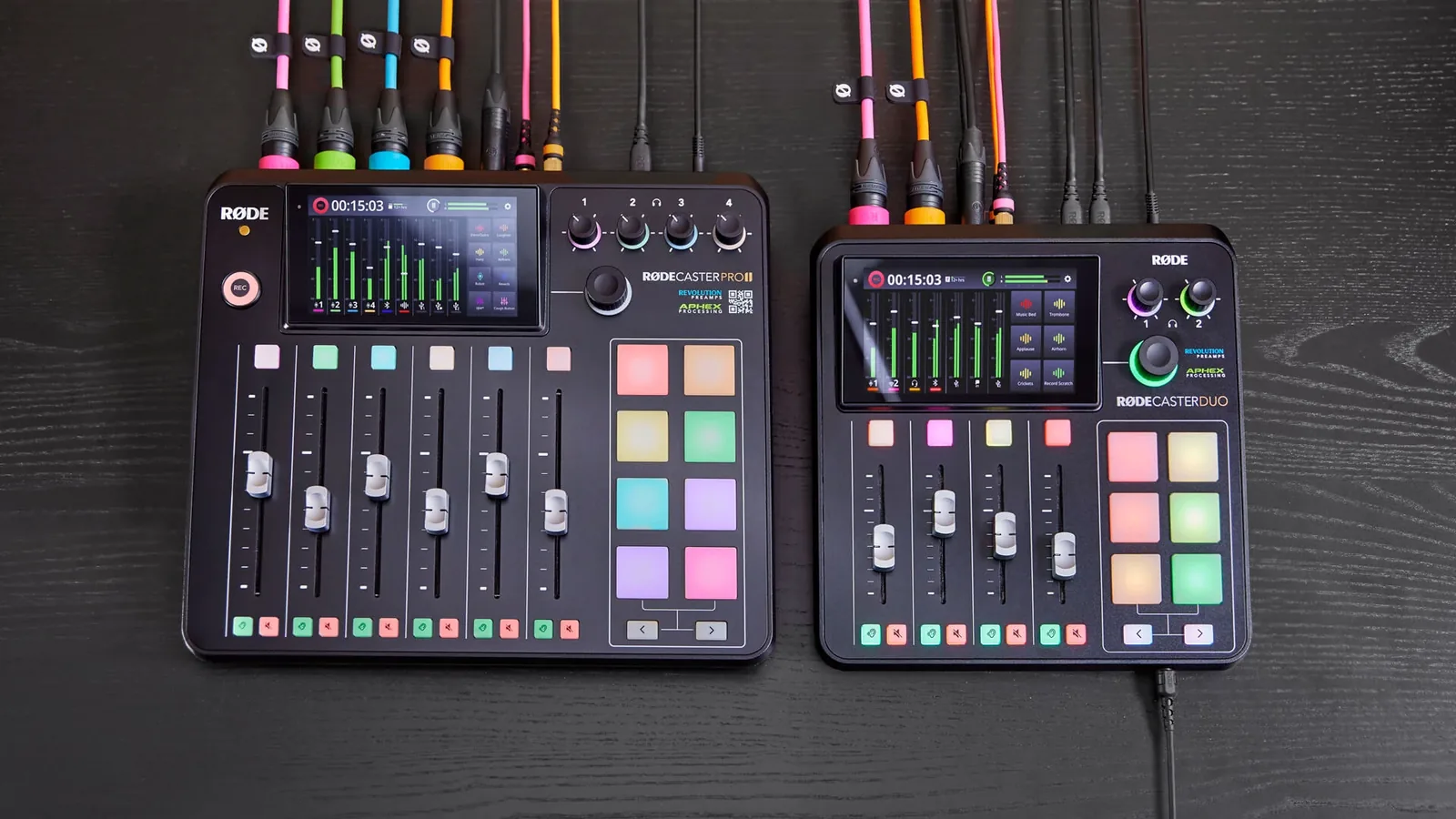
An XLR microphone needs a way into your computer.
That is the interface.
For creators, I would split the choice into three paths:
- Focusrite Scarlett 2i2 4th Gen for a traditional two-input interface;
- Elgato Wave XLR MK.2 for one microphone and a software-heavy streaming workflow;
- RØDECaster Duo for two microphones, physical faders, advanced routing and podcast production.
All three provide enough gain for a Shure SM7B.
The difference is everything around the microphone.
Quick answer
| Device | XLR inputs | Gain | Routing | Best fit |
|---|---|---|---|---|
| Focusrite Scarlett 2i2 4th Gen | 2 | 69 dB | Loopback | General recording |
| Elgato Wave XLR MK.2 | 1 | 80 dB | Wave Link | Solo streaming |
| RØDECaster Duo | 2 | 76 dB | Advanced routing + faders | Podcast and complex setups |
Audio interface or mixer?
For one person and one microphone, a small interface can cover the whole job.
The basic path is:
microphone → interface → USB → computer
Then you mix inside OBS, your DAW or other software.
RØDECaster Duo adds a physical production layer before the computer:
- faders;
- processing;
- pads;
- two mic inputs;
- two headphone outputs;
- local recording;
- broader routing.
If you rarely touch your audio after setup, a small interface is simpler.
If audio is something you actively operate while recording or streaming, the extra controls become much more useful.
How much gain does an SM7B need?
Shure recommends a preamp with more than 60 dB of gain for voice use with the SM7B.
It is a low-sensitivity dynamic microphone.
Older or basic interfaces sometimes forced users to push the preamp very hard.
These three current options all clear Shure’s recommendation:
Scarlett 2i2 4th Gen
69 dB
Wave XLR MK.2
80 dB
RØDECaster Duo
76 dB
Does an SM7B still need a Cloudlifter in 2026?
It depends on the interface.
With these three, I would start without one.
Elgato specifically mentions the SM7B when discussing Wave XLR MK.2 and says its 80 dB of clean gain removes the need for an inline amplifier.
RØDE explicitly advises against adding a Cloudlifter or line booster to RØDECaster Duo because its preamps already provide enough gain for low-output dynamic microphones.
Scarlett 2i2 offers 69 dB, also above Shure’s recommendation.
Test the real setup first:
- connect the SM7B;
- put it at your normal speaking distance;
- set gain;
- record;
- listen to voice level and noise.
If the signal is healthy, stop there.
When a Cloudlifter or FetHead still makes sense
They can help when:
- your interface has limited gain;
- the preamp is constantly maxed;
- preamp noise becomes obvious;
- you work further away from the microphone;
- another low-output dynamic or ribbon microphone needs more level.
A Cloudlifter CL-1 adds roughly 25 dB.
A standard FetHead adds roughly 27 dB.
Use them when they solve a problem.
Focusrite Scarlett 2i2 4th Gen
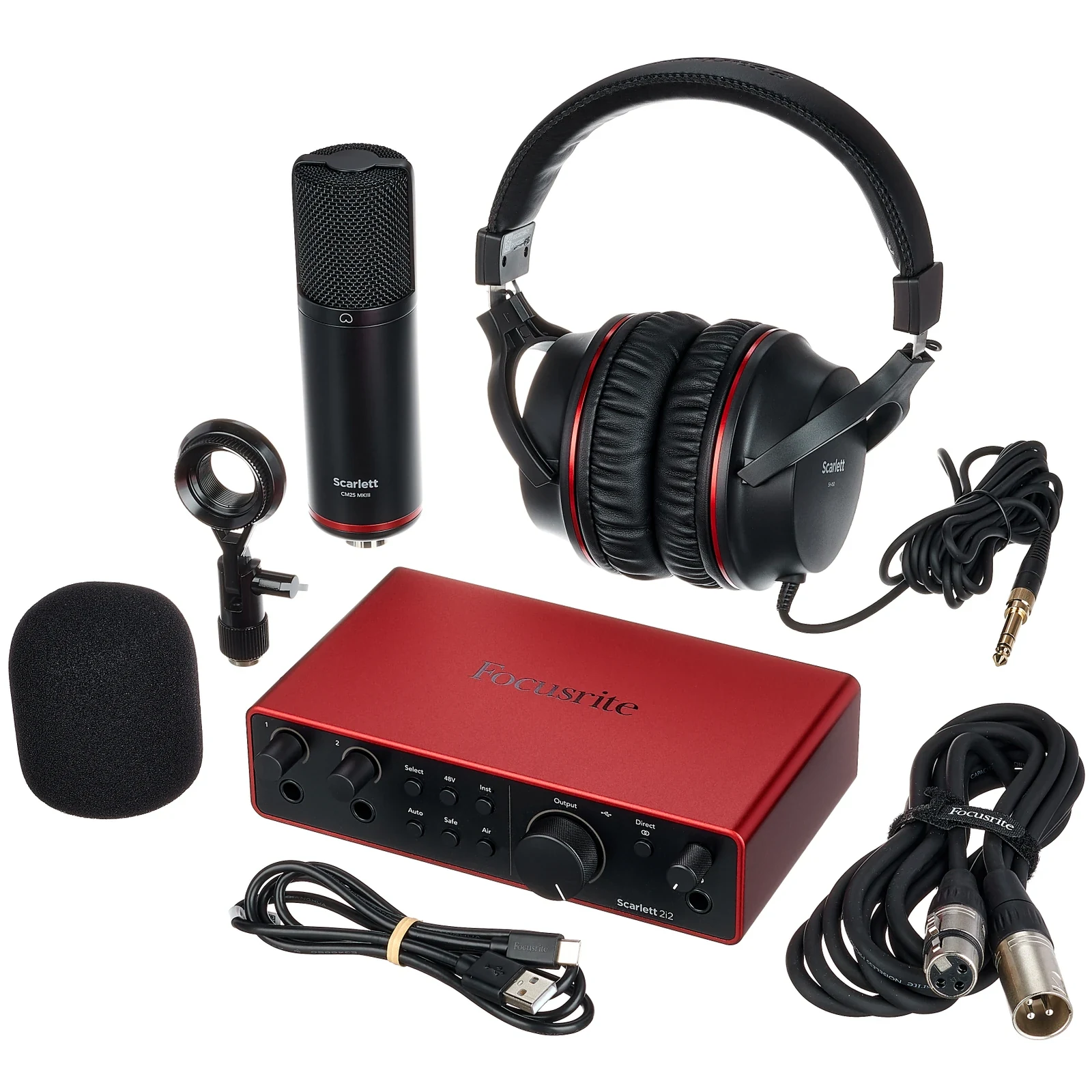
Scarlett 2i2 Studio 4th Gen kit. The microphone and headphones belong to the Studio bundle, not the interface sold on its own.
The 2i2 is the conventional interface here.
It includes:
- two combo inputs;
- two mic preamps;
- 69 dB gain range;
- Auto Gain;
- Clip Safe;
- Air modes;
- headphone output;
- loopback;
- recording up to 24-bit/192 kHz.
Search Amazon for Focusrite Scarlett 2i2 4th Gen
Who it suits
It works well for:
- voice;
- YouTube;
- two-person recording;
- music;
- mic plus instrument.
It does not require your whole workflow to revolve around streaming software.
Why two inputs matter
Today:
one SM7B.
Later:
- second microphone;
- guitar;
- synth;
- wireless receiver;
- line source.
The second input is already waiting.
Scarlett loopback
Focusrite specifically documents loopback for uses including:
- streaming;
- podcasting;
- screen recording;
- recording audio from the computer.
That covers many simple creator workflows.
If you want to constantly control game, Discord, browser, music and alerts as separate software sources, Wave Link is built more directly around that job.
Elgato Wave XLR MK.2
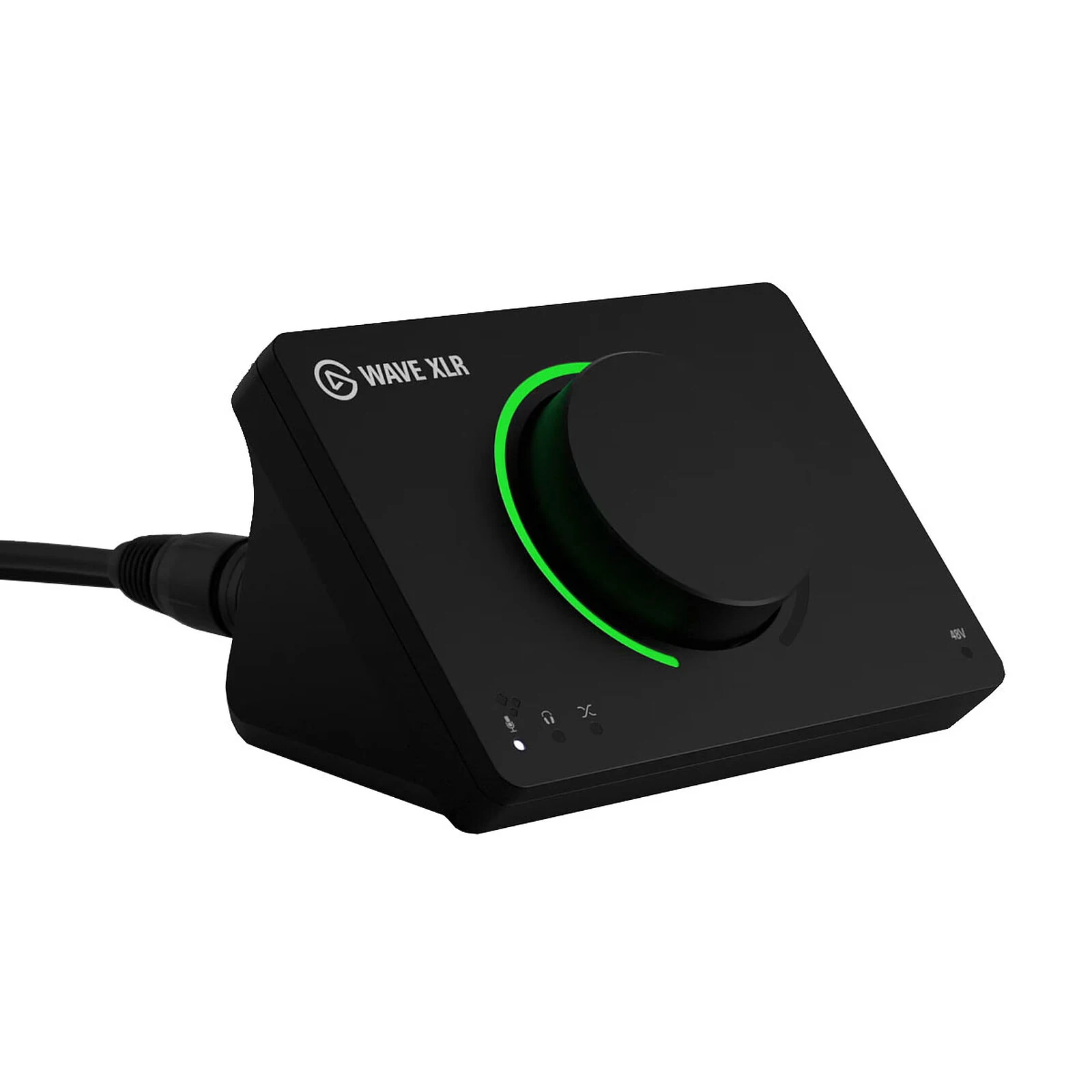
The photo shows the original Wave XLR. The specifications in this section refer to the MK.2.
Wave XLR MK.2 takes a different approach.
There is:
one XLR input.
Around it, Elgato builds a creator-focused software workflow.
It offers:
- 80 dB clean gain;
- Auto Gain;
- 48 V phantom power;
- Clipguard 2.0;
- Wave Link processing;
- headphone output;
- Stream Deck integration.
Search Amazon for Elgato Wave XLR MK.2
Its ideal use case
One creator.
One microphone.
Many computer sources.
For example:
- SM7B;
- game;
- Discord;
- Spotify;
- browser;
- alerts;
- OBS.
That is where Wave Link becomes useful.
Wave Link
Wave Link lets you manage several audio sources independently and build different mixes.
You can hear Discord louder in your headphones while the stream receives it at a lower level.
You can listen to music without recording it.
That flexibility is the main reason to choose Wave XLR over a conventional one-input interface.
The limitation
There is one XLR input.
For a solo creator, that may never matter.
The moment you want a second local microphone, it does.
RØDECaster Duo
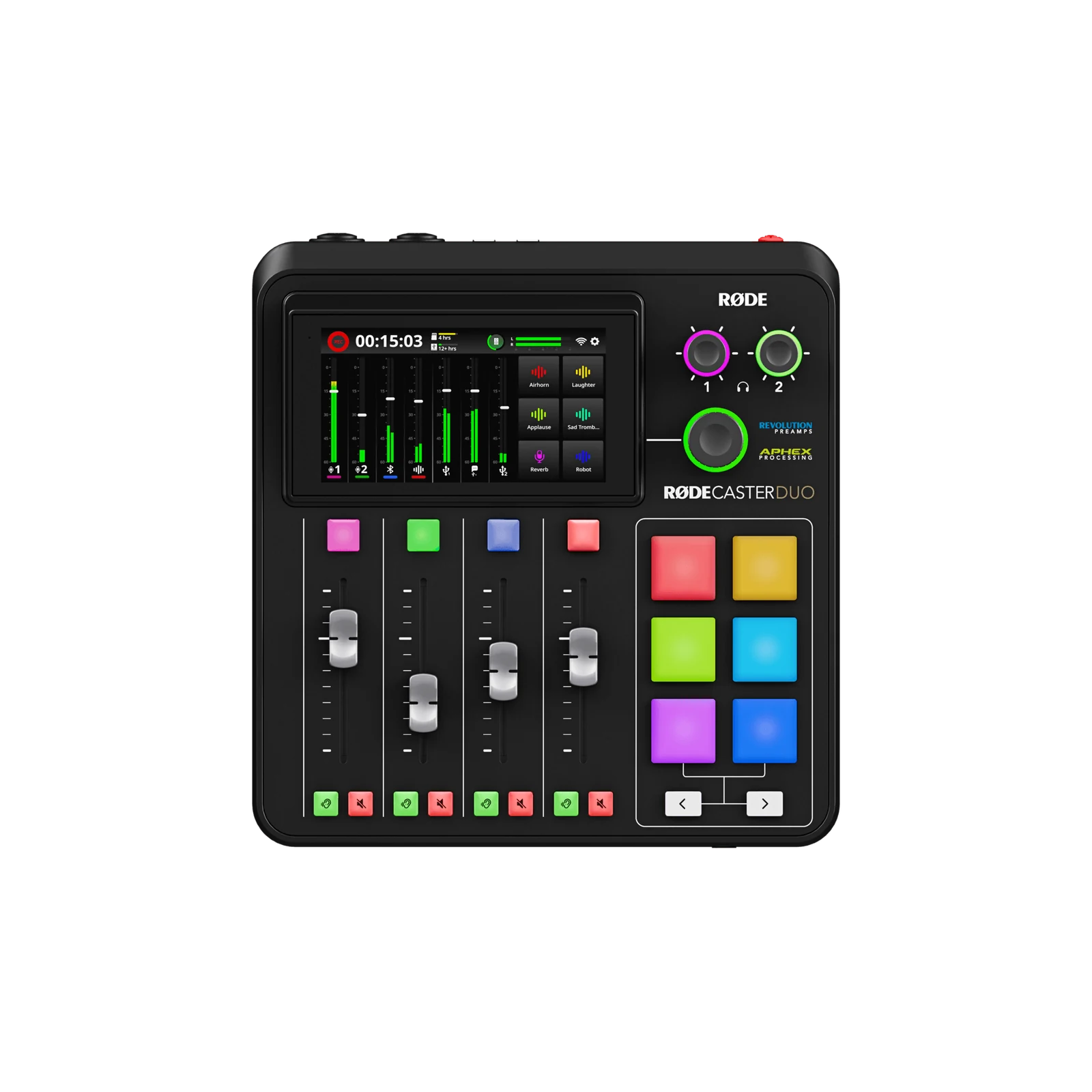
RØDECaster Duo with screen, four faders and colored pads.
RØDECaster Duo is closer to a small production studio.
It provides:
- two combo inputs;
- up to 76 dB gain;
- four physical faders;
- three virtual channels;
- two headphone outputs;
- onboard processing;
- SMART pads;
- local recording;
- Bluetooth;
- extensive routing.
RØDE also recommends against adding a line booster because the internal preamps already provide enough gain for low-output dynamic microphones.
Search Amazon for RØDECaster Duo
Two-person recording
This is a much cleaner starting point than Wave XLR for a local podcast.
Two microphones.
Two headphone outputs.
Physical controls.
Two computers
RØDECaster Duo also supports workflows involving two computers or devices over USB.
That is useful for:
- gaming PC + streaming PC;
- desktop + laptop;
- remote interviews;
- calls;
- split production workflows.
Its routing and mix-minus tools are built for that kind of use.
One input or two?
One input works for
- solo streaming;
- voice-over;
- YouTube;
- solo podcasting.
Two inputs work better for
- local guests;
- two hosts;
- mic + instrument;
- mic + wireless receiver.
Monitoring
All three let you hear the microphone without an annoying delay.
The difference is how much control you get.
Scarlett
Traditional interface workflow.
Wave XLR
Mic/PC control plus Wave Link.
RØDECaster Duo
Two headphone outputs, hardware mixing and more routing.
Which one would I buy?
Scarlett 2i2
If I want:
- two inputs;
- a traditional interface;
- music recording as well as voice;
- freedom from a streaming-specific ecosystem.
Wave XLR MK.2
If I want:
- one microphone;
- OBS;
- Discord;
- software routing;
- Stream Deck integration.
RØDECaster Duo
If I want:
- two microphones;
- podcasting;
- physical faders;
- internal processing;
- dual-computer workflows;
- local recording.
Common buying mistakes
Buying a Cloudlifter automatically with an SM7B
Check the interface first.
Buying more inputs than you will ever use
More hardware still costs money and desk space.
Buying one input when you already know a second guest is coming
That limitation appears at the worst possible time.
Buying RØDECaster Duo for one microphone and one Spotify channel
It works.
You are also paying for a lot of production hardware you may never touch.
Frequently asked questions
How much gain does the SM7B need?
Shure recommends more than 60 dB for voice use.
Can Scarlett 2i2 4th Gen drive it?
Yes. It offers 69 dB.
What about Wave XLR MK.2?
It offers 80 dB, and Elgato specifically says it can drive an SM7B without an inline booster.
RØDECaster Duo?
Up to 76 dB. RØDE recommends against adding a line booster.
Do I need a Cloudlifter?
With these interfaces, I would normally test direct first.
Best choice for two microphones?
Scarlett 2i2 or RØDECaster Duo.
Best choice for solo streaming?
Wave XLR MK.2 fits that workflow particularly well.
Best choice for two computers?
RØDECaster Duo is much better equipped for that type of routing.
What is loopback?
It sends computer audio back into a virtual input so you can record, stream or mix it.
More gear and creator guides
Sources
Focusrite — Scarlett 2i2 4th Gen specifications
Elgato — Wave XLR vs Wave XLR MK.2